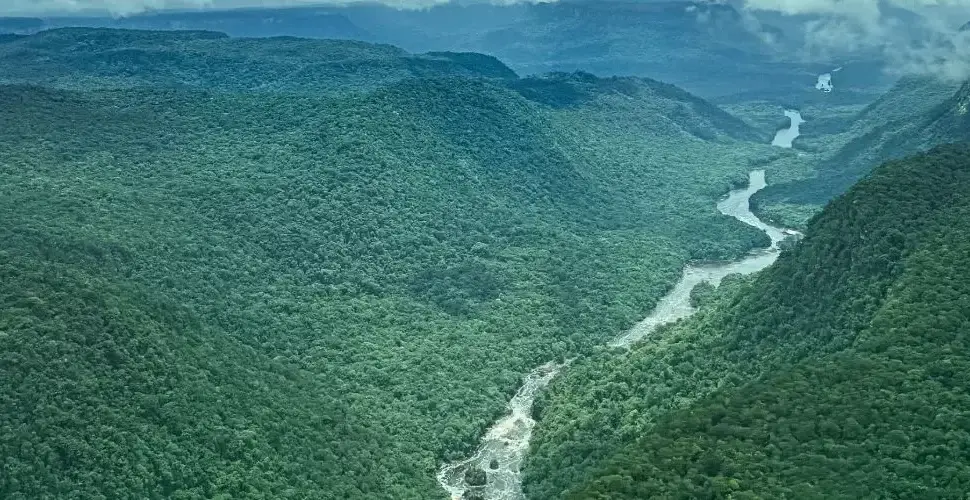
Guyana is a little-known country in South America, it offers an opportunity to explore one of the rainforests with the highest levels of biodiversity on the planet. Part of the Guiana Shield, Guyana’s rainforest covers an impressive 21 million hectares and contains unrivalled biodiversity. 87% of Guyana is covered by forest, placing it among the last frontiers ideal for eco-tourism.
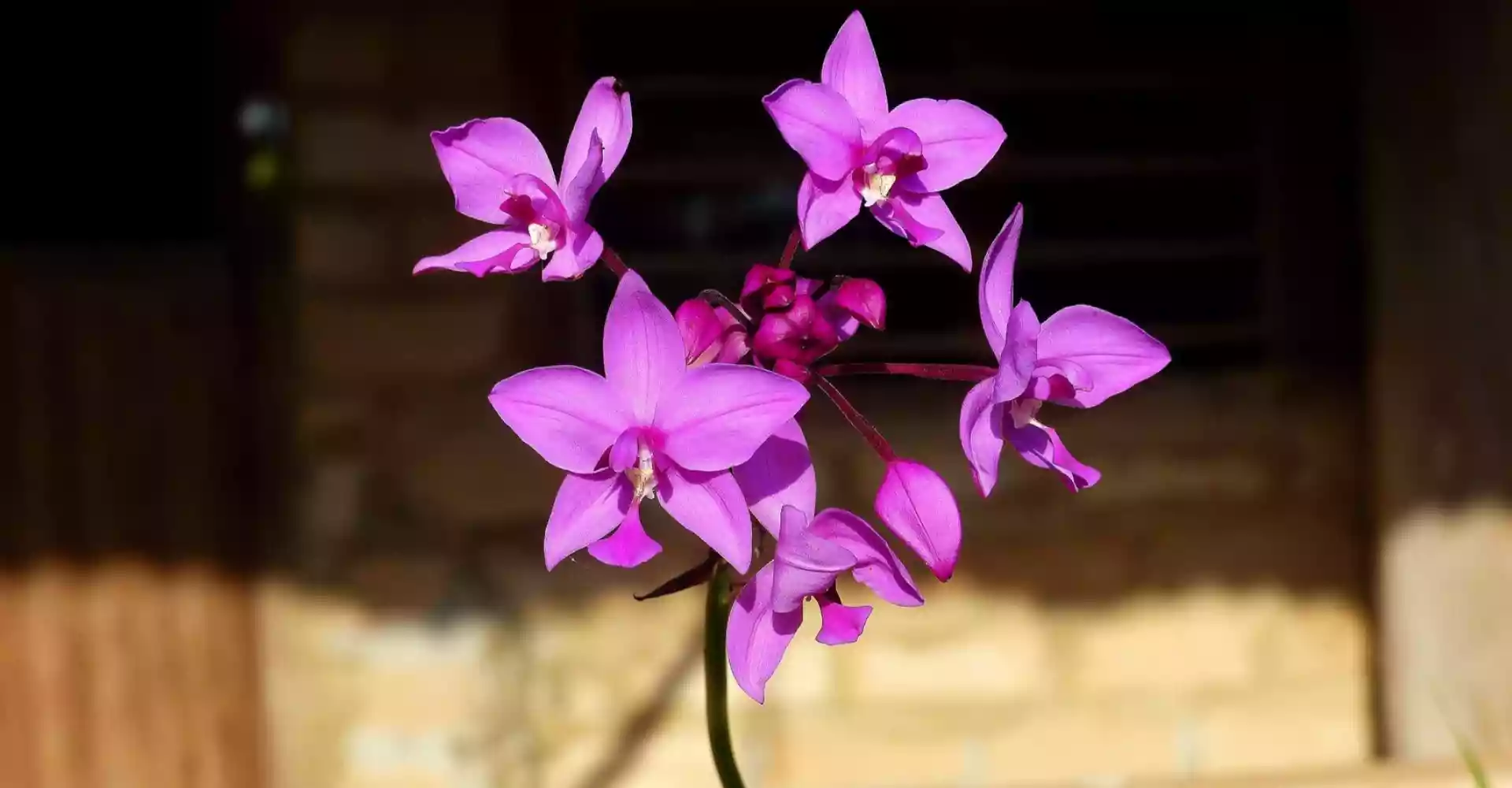
Photo: Purple orchid
Getting to the Guyanese Rainforest
Your adventure to the Guyana rainforest begins in Georgetown, the vibrant capital city accessible via direct flights from major hubs in North America, Europe, and the Caribbean. Most rainforest tours depart from Georgetown’s Eugene F. Correia International Airport (locally known as Ogle airport), taking you deep into the heart of the rainforest via small aircraft.

Photo: Caiman House Lodge
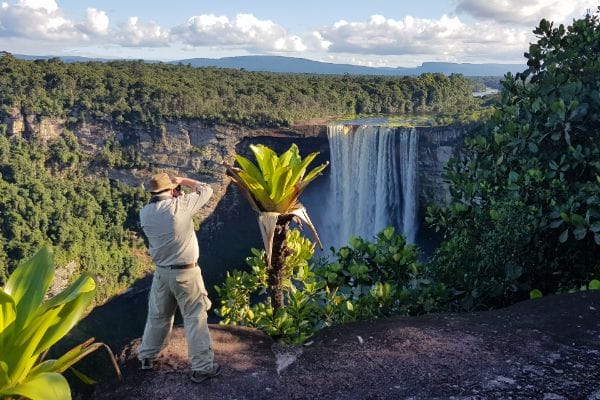
Travellers seeking more intrepid experiences can journey by road via the trail which goes through the savannahs into the Rupununi. Iconic sites include Kaieteur Falls and the Iwokrama Rainforest. Due to remote conditions, guided tours are strongly recommended to ensure safety and logistical ease.
Experiencing A Guyana Rainforest Adventure
Embarking on a Guyanaese rainforest tour means stepping into one of the most biodiverse habitats on Earth. Rainforest adventures typically include wildlife spotting, birdwatching, river explorations, and trekking. Expert local indigenous guides enhance each expedition, sharing their extensive knowledge of the flora and fauna.
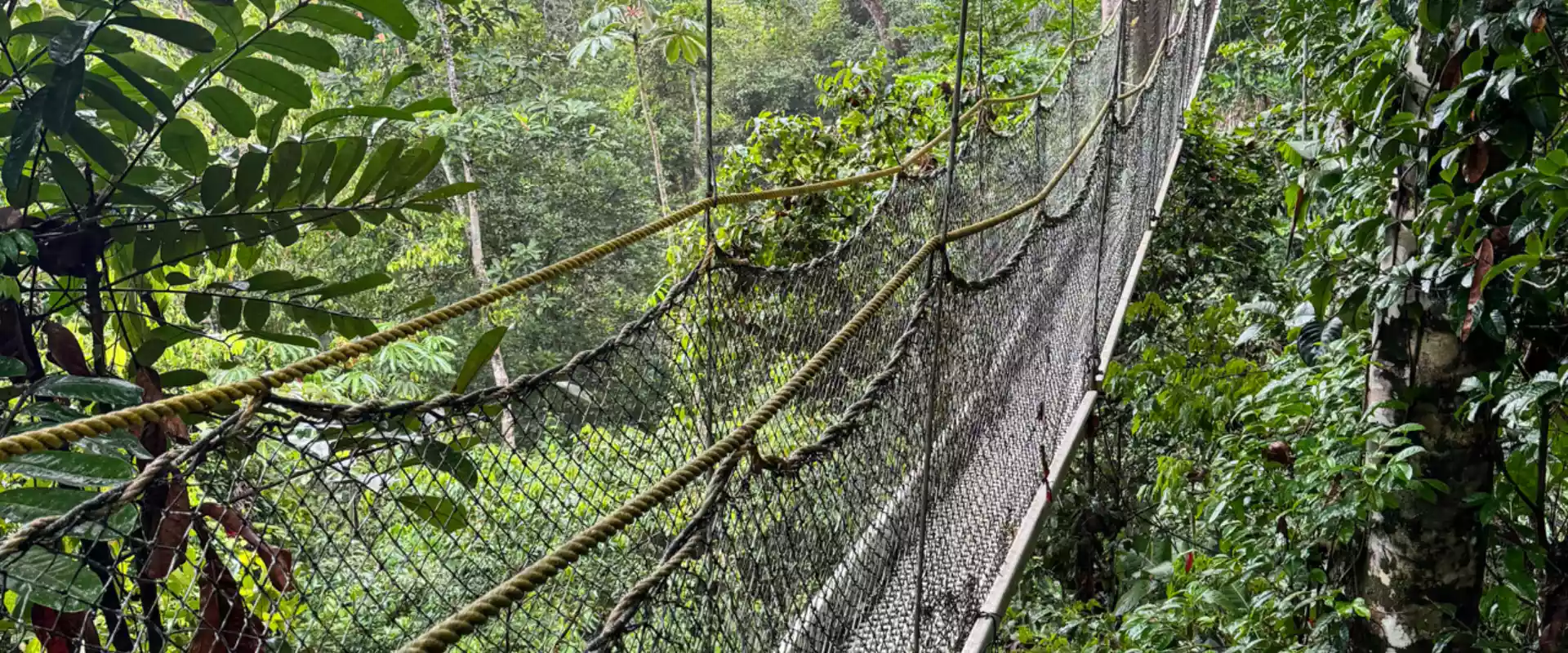
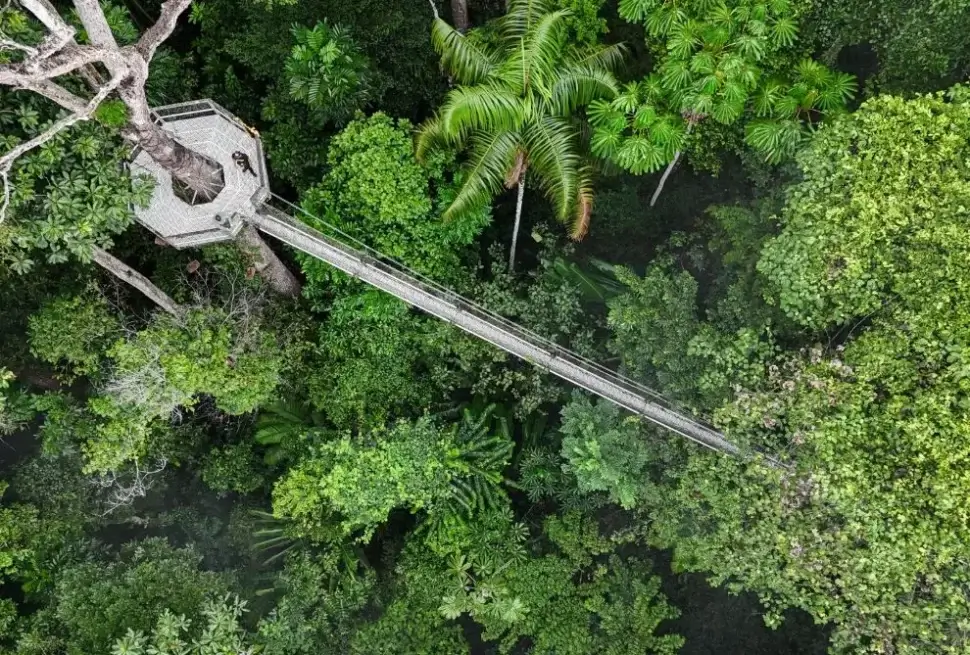
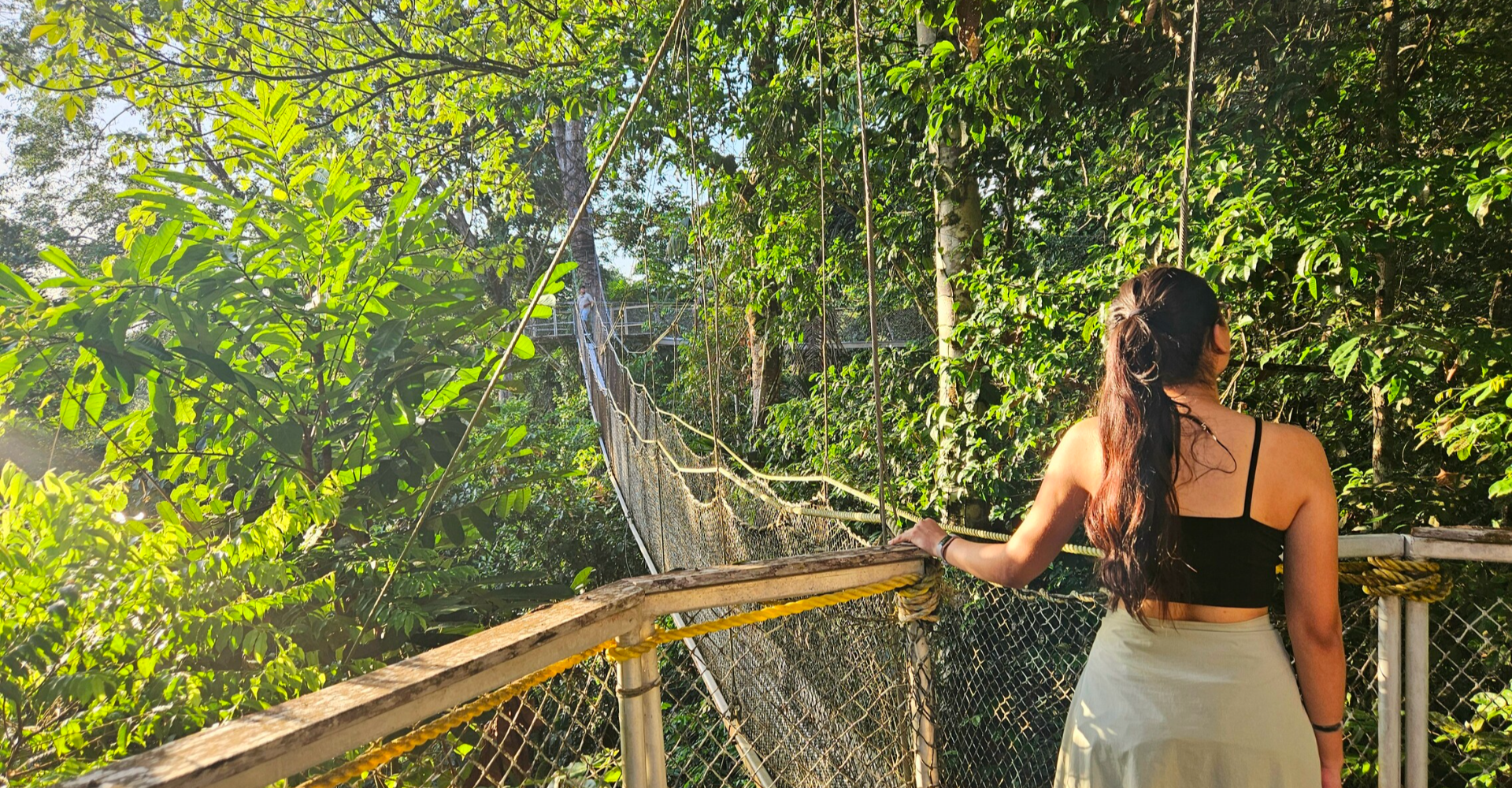
Photo: Iwokrama Canopy Bridge – © David DiGregorio
The Iwokrama Canopy Walkway, elevated 30 meters above the forest floor, is a prime highlight, offering the possibility of breathtaking views of rainforest wildlife, including howler monkeys, vibrant macaws, and rare species like the Harpy eagle. Guyana’s rainforest and savannahs offer good opportunities to spot giant river otters, giant anteaters and black caiman, particularly along the Rupununi and Essequibo Rivers. With some luck you may see the elusive jaguar.
Eco-friendly Rainforest Lodges in Guyana
Accommodations within the Guyanese rainforest emphasise sustainability and conservation. Lodges such as Iwokrama River Lodge, Surama Eco-Lodge, Caiman House, Wichabai Ranch and Rewa Eco-Lodge offer comfortable stays while prioritising eco-friendly practices. Staying at these lodges provides an immersive experience, allowing travellers to connect deeply with the lush surroundings and support local conservation efforts.
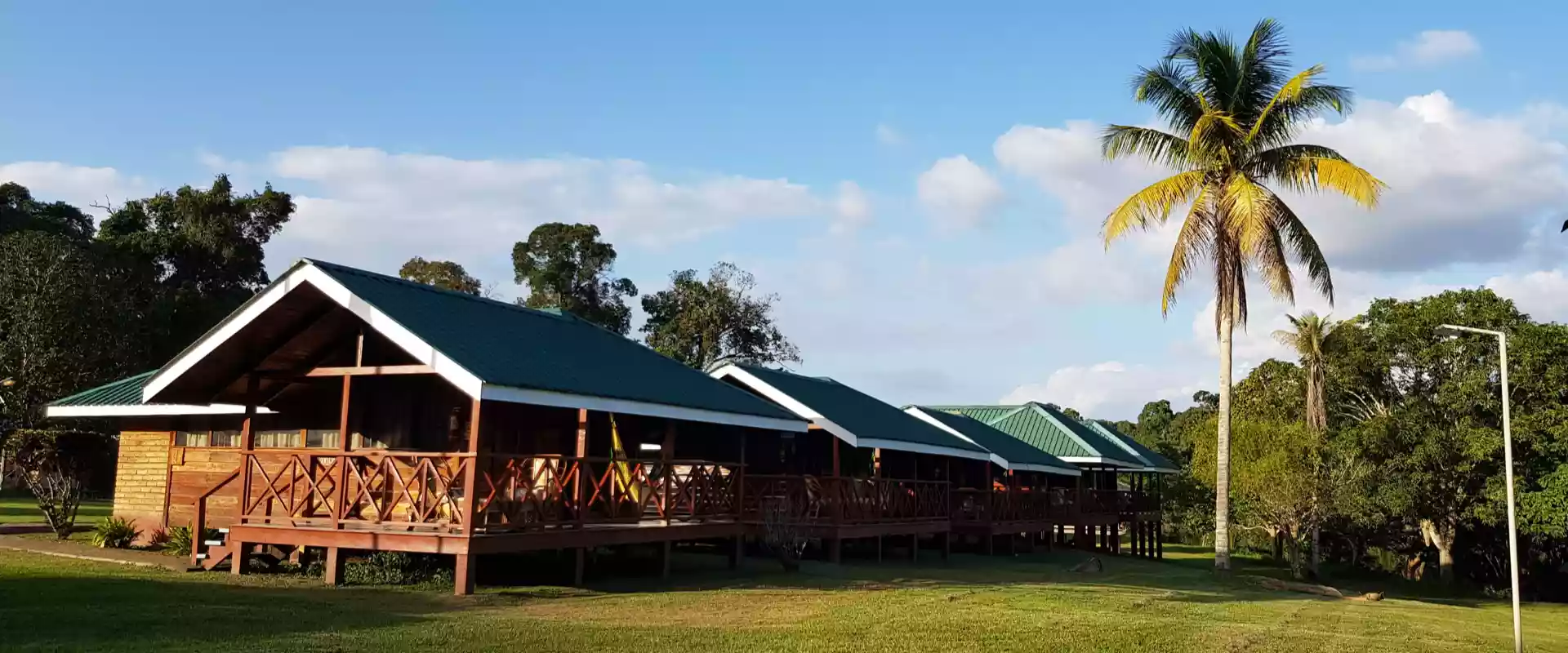
Photo: Iwokrama River Lodge
Guyana Rainforest Wildlife and Biodiversity
The rainforest of Guyana harbour an extraordinary biodiversity due to the remote and pristine condition, paired with low human population density. Over 800 species of birds, 225 species of mammals, and countless reptiles, amphibians, and insects inhabit these lush forests. Notably, species such as the jaguar, puma, tapir, giant anteater, and rare reptiles like the emerald tree boa and black caiman flourish here, drawing wildlife enthusiasts from across the globe.
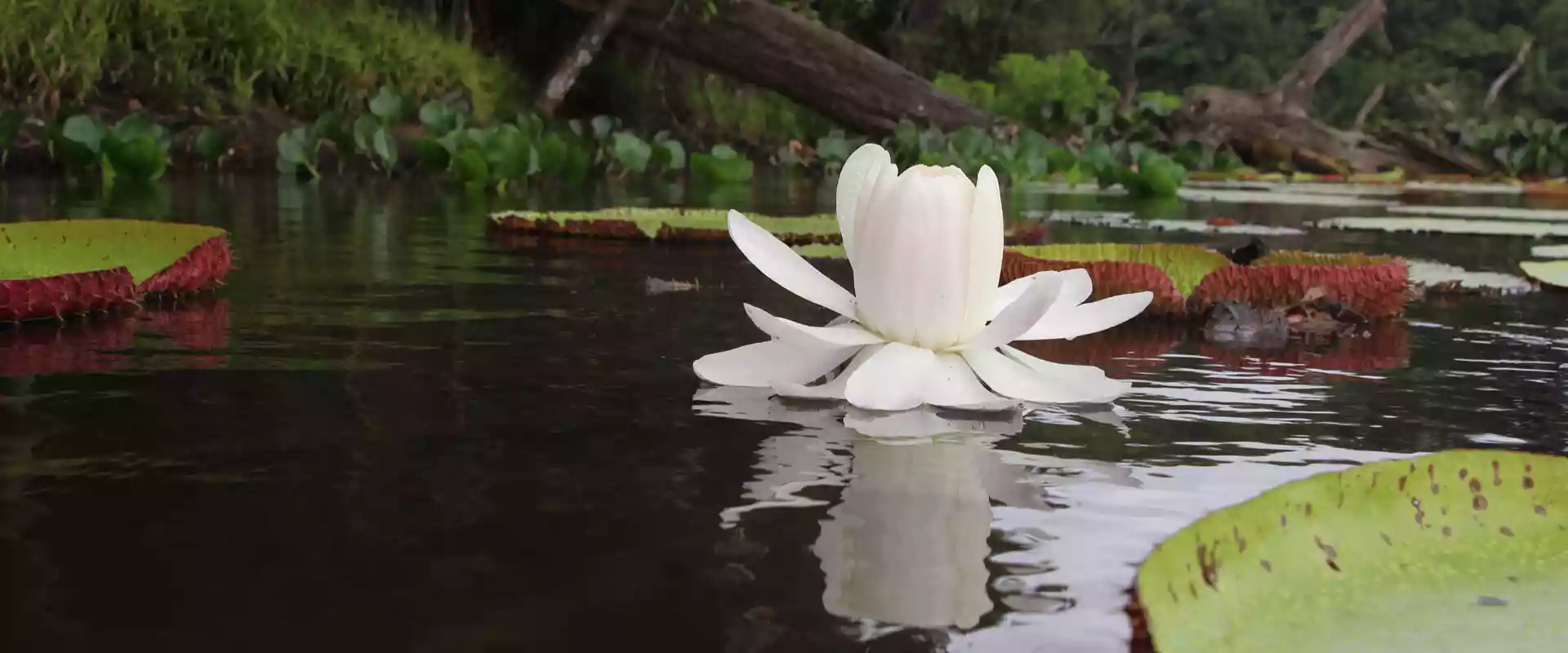
Photo: Victoria amazonica water lily
Responsible Tourism in Guyana
Guyana’s commitment to protecting its rainforest environment is central to the sustainability of these tours. Strict regulations can help minimise environmental impacts, making it a model for eco-tourism worldwide. Visitors are encouraged to follow responsible travel practices like using local guides, supporting eco-lodges, and respecting wildlife and local communities.
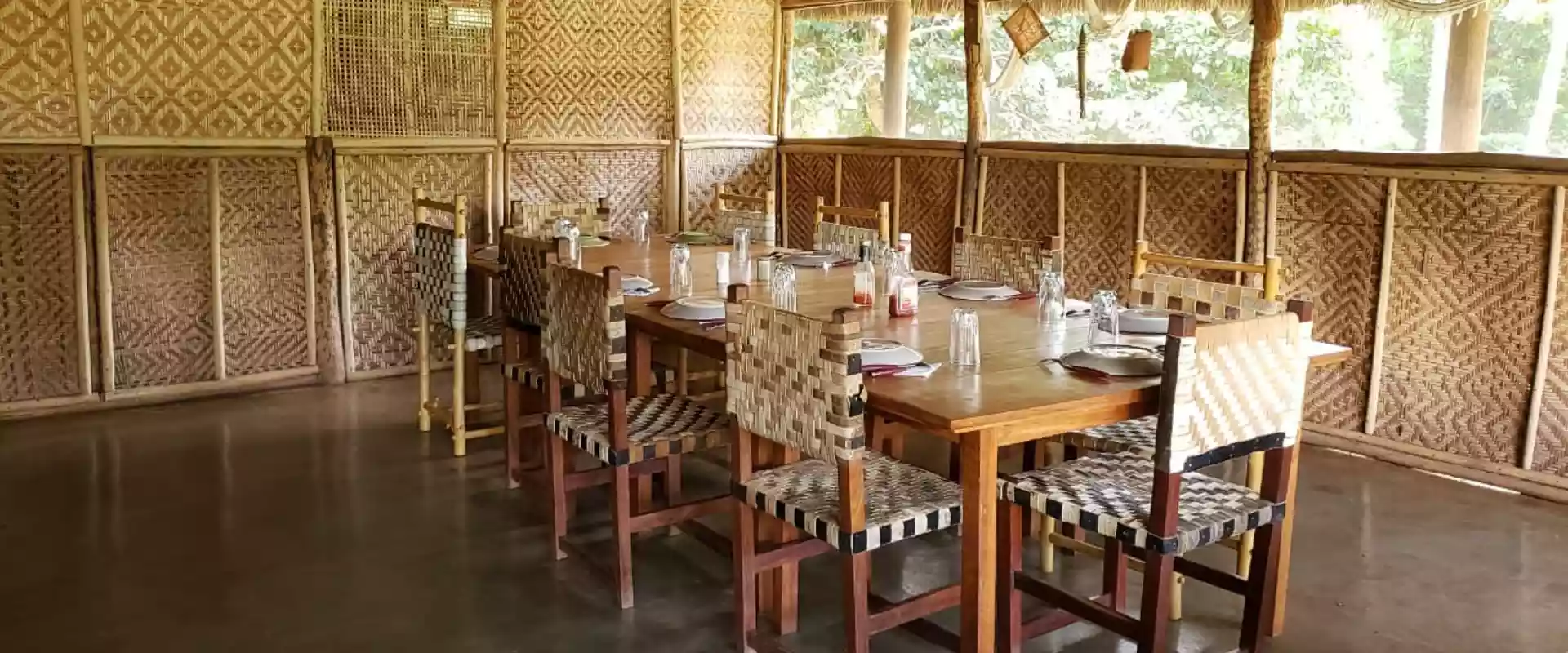
Photo: Caiman House dining
Essential Tips for Your Guyana Rainforest Tour
- Preparation: Pack lightweight clothing, sturdy boots, insect repellent, sunscreen, and rain gear.
- Health and Safety: Ensure vaccinations are up-to-date, including yellow fever and hepatitis A.
- Guided Tours: Engage professional guides who possess in-depth knowledge of local terrain and wildlife.
- Connectivity: Most lodges have wifi connections.
Conclusion
A journey to the rainforest of Guyana isn’t merely an adventure; it’s an immersive encounter with one of the world’s most untouched natural paradises. From thrilling wildlife encounters to peaceful eco-lodges, Guyana offers unparalleled opportunities to reconnect with nature responsibly. If you’re searching for an authentic rainforest adventure, look no further than the remarkable wild of Guyana.

Photo: Atta Rainforest Lodge
Frequently Asked Questions
1. What is the best time to visit the Guyana rainforest?
The best time to visit is during the dry seasons: January to April and August to November. These months offer clearer skies, easier travel conditions, and better opportunities for wildlife sightings during your Guyana rainforest adventure.
2. What wildlife can I expect to see in the Guyana rainforest?
The Guyana rainforest is home to the elusive jaguars, giant river otters, black caimans, howler monkeys, scarlet macaws, and over 800 species of birds. Many Guyana rainforest tours focus on birdwatching and river safaris to observe this rich biodiversity.
3. Is a rainforest tour in Guyana safe?
Yes, when done with certified guides and reputable eco-lodges, a Guyana rainforest tour is safe and professionally managed. Lodges and operators follow responsible tourism practices to ensure safety and minimal environmental impact.
4. How do I reach the Guyana rainforest from Georgetown?
You can take a small aircraft from Georgetown’s Eugene F. Correia International Airport to places like Iwokrama, Surama, or Lethem. Overland travel through the Rupununi Savannah is possible but slower, ideal for those seeking a rugged adventure.
5. Are the rainforest lodges eco-friendly?
Absolutely! Lodges like Iwokrama River Lodge, Rewa Eco-Lodge, Atta Rainforest Lodge and Surama Eco-Lodge are pioneers in community-run and sustainable tourism in Guyana. They minimise ecological footprints while supporting indigenous livelihoods.
6. Do I need a visa to travel to Guyana?
Visitors from many countries, including the US, UK, Canada, and the EU can enter visa-free for short stays up to 90 days for Guyana. However, it’s best to check the latest travel requirements from Guyana’s Ministry of Foreign Affairs or your local embassy.
7. What should I pack for a rainforest adventure in Guyana?
Essentials include lightweight clothing, long sleeves, sturdy hiking boots, insect repellent, a waterproof bag, and binoculars. A headlamp and quick-dry towel also come in handy in rainforest conditions.
8. How long is a rainforest tour in Guyana?
A brief trip of 5 to 6 days will give you a sense of the rainforest. But ideally, a 10 to 15 day adventure allows enough time to really immerse yourself in the experience.
9. Can I see Kaieteur Falls on a rainforest trip?
Yes! Most Guyana rainforest adventures include Kaieteur Falls, the world’s highest single-drop waterfall. It’s accessible via small plane from Georgetown and often paired with nearby rainforest exploration.
10. Is the Guyana rainforest part of the Amazon?
The Guyana rainforest forms part of the Guiana Shield, a separate but ecologically rich rainforest region adjacent to the Amazon Basin. In fact many of Guyana’s river flow south into the tributaries of the Amazon River. It’s often referred to as the “lungs of South America” due to its intact oxygen production.